October 6, 2026
Why Is My Car So Damp Inside? 7 Causes During a Whatcom County Fall
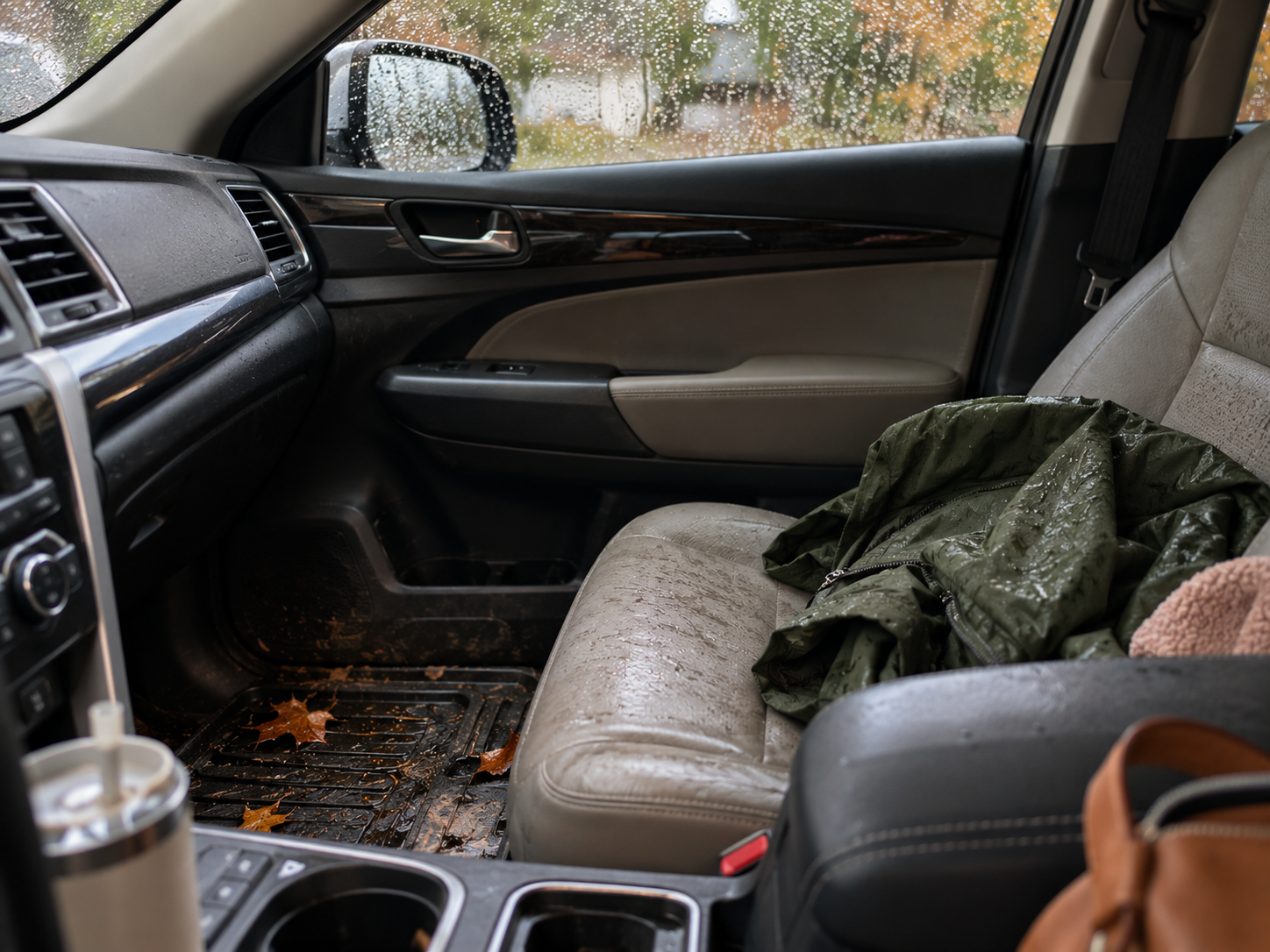
If your car feels damp inside, your windows constantly fog up, or you’ve noticed a musty smell after a few rainy days, you’re not alone. Fall in Bellingham and Whatcom County means cooler temperatures, frequent rain, wet shoes, muddy floor mats, leaves and plenty of moisture getting tracked into our vehicles.
But why does a car get damp inside, and when is it something you should worry about?
Sometimes, the answer is as simple as wet floor mats that never get a chance to dry. Other times, persistent moisture can point to a leak or drainage issue that needs attention.
Here are seven common reasons your vehicle may feel damp inside during a Pacific Northwest fall—and what you can do about them.
1. Wet Shoes and Floor Mats Are Bringing Moisture Inside
One of the simplest causes is also one of the most common.
Every time you get into your vehicle with wet shoes, rain jackets, umbrellas or muddy gear, you're bringing water with you. Rubber floor mats can contain much of it, but carpeted mats and the carpeting underneath can absorb moisture.
This is especially common for families. Between school drop-offs, fall sports, kids jumping into the car with wet shoes and dogs coming back from rainy walks, a surprising amount of water can accumulate inside a vehicle.
If that moisture doesn't completely dry before the next rainy day, the interior can stay damp for days or even weeks.
What to do: Remove wet mats periodically and allow them to dry completely. If the carpeting underneath feels damp, don't simply place the mat back over it.
2. Your Carpet or Upholstery Never Fully Dried
Once automotive carpet, padding or cloth upholstery becomes saturated, drying the surface isn't always enough.The top of your carpet may feel relatively dry while the padding underneath is still holding moisture.
This trapped moisture can contribute to:
- Persistent musty odors
- Foggy windows
- Mildew or mold growth
- Staining
- An interior that always seems humid
This is one reason a vehicle may continue smelling damp even after you've removed the original source of the water.
Professional interior detailing can help when dirt, spills and trapped moisture have worked their way into carpeting and upholstery. Deep cleaning and extraction can reach areas that ordinary vacuuming and surface cleaning cannot.
3. Leaves and Fall Debris Can Create Drainage Problems
Those beautiful fall leaves can create problems for your vehicle.
Leaves, pine needles, dirt and other organic debris can collect around the base of the windshield, weather stripping and drainage areas.
When drainage pathways become obstructed, rainwater may not flow away from the vehicle as intended. During Whatcom County's rainy season, it's a good idea to periodically remove leaves and debris rather than allowing them to accumulate for weeks. Pay particular attention if your vehicle is regularly parked outside or underneath trees.
4. A Door, Window or Trunk Seal May Be Leaking
If you repeatedly find one specific section of carpet wet after it rains, the problem may be more than normal fall moisture.
Water can sometimes enter around:
- Door seals
- Window seals
- Windshields
- Trunk or hatch seals
- Sunroofs
- Body seams
A useful clue is where the moisture appears. If the driver's floor is consistently wet while the rest of the vehicle is dry, for example, that's different from an entire interior simply feeling humid after several rainy days. Persistent or localized wetness should be investigated rather than repeatedly cleaned.
5. Your Sunroof Drains Could Be Clogged
Many sunroofs are designed with drainage channels that direct rainwater through tubes and away from the vehicle. If one of those drains becomes clogged with dirt or debris, water may end up somewhere it shouldn't—including the headliner, pillars or carpeting.
Signs of a possible sunroof drainage problem can include water stains around the headliner, unexplained wet carpeting or moisture that appears after heavy rain.
If you suspect an active leak, addressing the underlying cause should come before repeatedly cleaning the interior.
6. Fall Temperature Changes Are Fogging Up Your Windows
Have you noticed your windows fogging much more frequently once fall arrives?
Condensation forms when warm, moisture-filled air inside your vehicle meets colder glass.
A little window fogging during cool, rainy weather is normal. But windows that constantly fog or have heavy condensation on the inside can be a clue that your vehicle is holding excess moisture.
Wet carpeting, damp clothing, soaked floor mats and even accumulated interior moisture can all contribute. Using your vehicle's defroster and air conditioning can help remove moisture from the cabin air. But if the windows keep fogging excessively, it's worth checking whether something inside the vehicle is actually wet.
7. Dirt, Food, Pet Hair and Moisture Can Create That “Musty Car” Smell
Sometimes what people describe as a "wet" or "mildew" smell isn't caused by water alone.
Moisture combined with dirt and organic material creates an environment where unpleasant odors can develop.
Think about everything that can accumulate inside a family vehicle during a Whatcom County fall: food crumbs, pet hair, dirt, mud, wet leaves, spilled drinks and damp carpeting.
Add weeks of rainy weather and very little opportunity for the interior to completely dry, and suddenly the car doesn't smell quite as fresh as it did during summer.
Why Does My Car Smell Musty After It Rains?
A musty smell after rain usually means moisture is lingering somewhere inside the vehicle.
Start by checking the floor mats and carpeting—including underneath the mats. Look in the trunk or cargo area and feel around the edges of the carpet.
If one area repeatedly becomes wet after rain, you may have a leak that needs to be diagnosed.
If there's no active leak but the interior has accumulated dirt, moisture and odor over time, a thorough interior detail may help remove the contamination causing the smell.
Can a Damp Car Interior Develop Mold or Mildew?
Yes. Persistent moisture inside a vehicle can create conditions that allow mold or mildew to develop, particularly when moisture is combined with organic material and poor airflow.
The best strategy is prevention.
Don't allow soaked carpeting, upholstery or floor mats to remain wet for long periods, and investigate recurring moisture instead of simply covering it with a floor mat or trying to mask an odor with an air freshener.
Can Professional Auto Detailing Fix a Damp or Musty Car?
It depends on what's causing the problem. If your vehicle has accumulated dirt, stains, pet hair, spills, odors or moisture in the carpeting and upholstery, professional interior detailing and extraction can make a significant difference.
However, detailing cannot repair an active water leak. If rainwater is entering through a damaged seal, windshield, sunroof drain or another part of the vehicle, that issue needs to be repaired. Otherwise, the interior may simply become wet again.
At Final Touch Auto Spa in Bellingham, we can thoroughly clean the interior and help address the mess that Whatcom County's wet fall weather can leave behind. If the moisture appears to be coming from an active leak, we'll always recommend addressing the source rather than pretending cleaning alone will solve it.
How to Keep Your Car Interior Dry This Fall
A few simple habits can make a big difference during Bellingham's rainy season:
- Shake excess water and mud from shoes before getting into the vehicle.
- Remove and dry wet floor mats instead of leaving them inside.
- Check underneath your mats periodically for hidden moisture.
- Remove leaves and debris from around the vehicle's exterior drainage areas.
- Don't leave wet jackets, towels, sports equipment or pet gear sitting in the vehicle.
- Use your defroster and A/C to help reduce cabin humidity.
- Pay attention to recurring wet spots after heavy rain.
- Have heavily soiled carpeting and upholstery professionally cleaned when needed.
Most importantly, don't ignore a car interior that stays wet.
A little moisture after a rainy Bellingham afternoon is normal. Carpeting that remains damp for days, recurring puddles or a persistent musty odor deserves a closer look.
Fall Auto Detailing in Bellingham, WA
Fall is one of the messiest seasons for vehicles in Whatcom County.
Rain, mud, wet leaves, pets, kids and outdoor adventures all eventually make their way inside your car. Taking care of that buildup now can help keep your interior cleaner and more comfortable throughout the long Pacific Northwest rainy season. If your vehicle is overdue for a deep interior clean, Final Touch Auto Spa provides professional auto detailing in Bellingham for drivers throughout Whatcom County, including Ferndale, Lynden, Blaine, Birch Bay and the surrounding communities. From deep interior cleaning and carpet extraction to complete vehicle detailing, our team can help give your vehicle a fresh start for fall.
Ready to get the summer dirt, stains and fall grime out of your vehicle? Contact Final Touch Auto Spa in Bellingham to schedule your next detail.